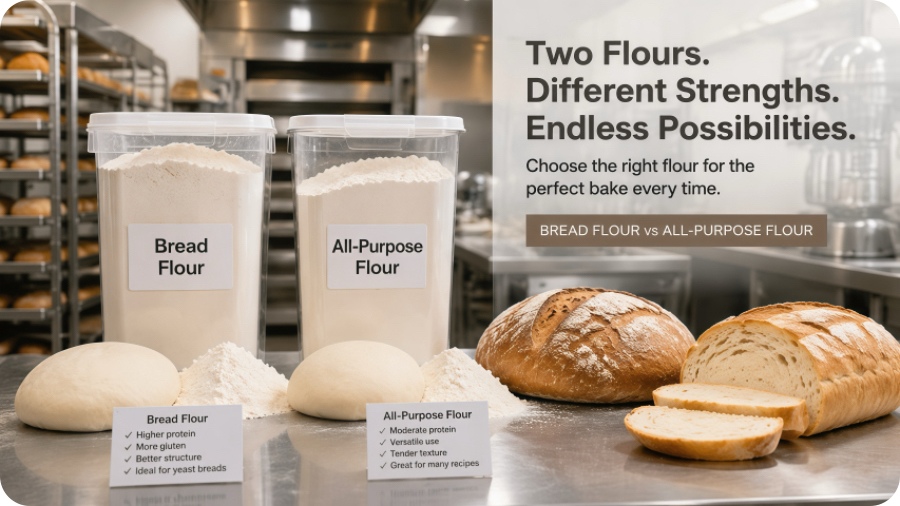
يبدأ العديد من الخبازين بسؤال بسيط: هل نوع دقيق الخبز مهم حقًا، أم أن الدقيق متعدد الاستخدامات يؤدي الغرض نفسه؟ تعتمد الإجابة على المنتج، والوصفة، ومعايير الإنتاج. في الخبز بكميات صغيرة، قد لا يكون الفرق ملحوظًا. أما في إنتاج الخبز التجاري، فيمكن أن يؤثر اختيار الدقيق على سهولة التعامل مع العجين، وتحمله للتخمير، وارتفاعه في الفرن، وبنية فتاته، وقوام المنتج النهائي.
يُصنع دقيق الخبز والدقيق متعدد الاستخدامات من القمح، لكنهما ليسا مصممين لنفس الغرض. يكمن الاختلاف الرئيسي في محتوى البروتين، الذي يؤثر على تكوين الغلوتين. الغلوتين هو الشبكة التي تحبس غاز التخمير، وتدعم حجم الرغيف، وتمنح الخبز قوامه وملمسه. عندما يزيد المخبز من إنتاجه، يصبح هذا الاختلاف أكثر وضوحًا، لأن كل تغيير بسيط في تركيبة الدقيق يؤثر على مئات أو آلاف القطع.
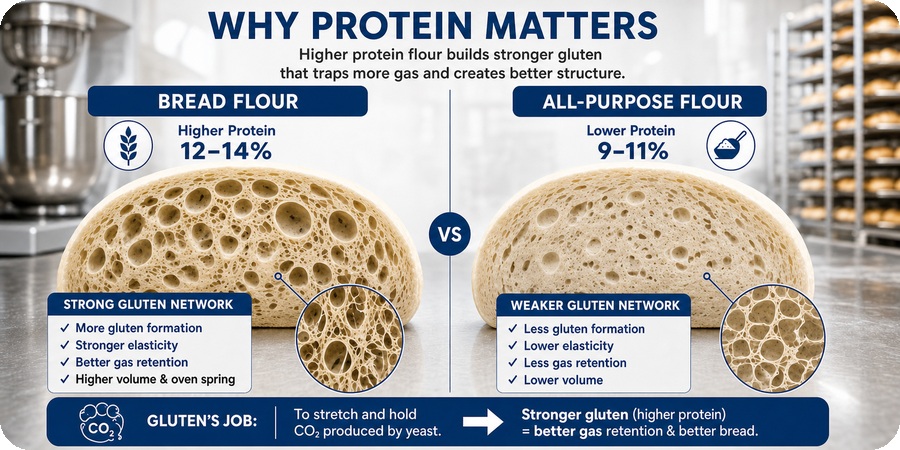
يحتوي دقيق الخبز عادةً على نسبة بروتين أعلى من دقيق القمح متعدد الاستخدامات. في العديد من الأسواق، تتراوح نسبة البروتين في دقيق الخبز بين 12% و14%، بينما تتراوح في دقيق القمح متعدد الاستخدامات بين 9% و11%، وذلك بحسب المطحنة ونوع القمح المستخدم. تختلف النسبة الدقيقة باختلاف المورد، لكن المبدأ واحد: كلما زادت نسبة البروتين، زادت قوة الغلوتين في العجين.
هذا الأمر مهم لأن عجينة الخبز يجب أن تتمدد أثناء التخمير والخبز. تنتج الخميرة ثاني أكسيد الكربون، ويجب أن تتمدد شبكة الغلوتين دون أن تتمزق. يتميز الدقيق الأقوى بقدرته على الاحتفاظ بكمية أكبر من الغاز، ودعم ارتفاع العجينة بشكل أفضل في الفرن، وإنتاج فتات أكثر تماسكًا ومرونة. لهذا السبب يُستخدم دقيق الخبز عادةً في خبز الساندويتشات، والخبز المحمص، والباغيت، وخبز البرغر، وقواعد البيتزا، والعديد من المنتجات المخمرة بالخميرة.
صُمم الدقيق متعدد الاستخدامات ليكون مناسبًا لمجموعة واسعة من المخبوزات. فهو يصلح للكعك، والبسكويت، والخبز السريع، والمعجنات، وبعض أنواع الخبز البسيط. يُضفي انخفاض نسبة البروتين فيه عادةً قوامًا أكثر ليونة، وهو ما قد يكون مفيدًا للمنتجات الطرية، ولكنه قد لا يكون مناسبًا لوصفات الخبز التي تتطلب ارتفاعًا، أو قوامًا مطاطيًا، أو قدرة على تحمل التخمير لفترات طويلة.
كيف يؤثر بروتين الدقيق على معالجة العجين؟
يؤثر محتوى البروتين على ملمس العجين في الخلاط وعلى خط الإنتاج. يمتص دقيق الخبز كمية أكبر من الماء، وغالبًا ما يتحمل فترات عجن أطول. ينتج عن ذلك عجين أقوى وأسهل في التقسيم والتشكيل والتخمير دون أن يفقد شكله. في المخابز التجارية، يمكن لهذا أن يقلل من التصاق العجين، وعدم انتظام القطع، وضعف جوانب الخبز.
قد ينتج عن استخدام الدقيق متعدد الاستخدامات عجينة أكثر ليونة، أو أكثر مرونة، أو أكثر هشاشة. قد يُعجن بشكل أسرع، ولكنه قد يُعجن أكثر من اللازم بسهولة. إذا استخدم المخبز الدقيق متعدد الاستخدامات في وصفة الخبز دون تعديل، فقد تنتشر العجينة، أو تختمر بسرعة كبيرة، أو لا تحتفظ بكمية كافية من الغاز. والنتيجة قد تكون رغيفًا أصغر حجمًا، أو فتاتًا أكثر تماسكًا، أو شكلًا غير متناسق.
لا يعني هذا أن دقيق الخبز هو الأفضل دائمًا، بل يعني أن الدقيق يجب أن يتناسب مع المنتج. قد لا يحتاج خبز العشاء الطري، أو الكعك المطهو على البخار، أو الخبز المسطح الرقيق إلى دقيق قوي. بينما يستفيد رغيف الساندويتش ذو الحجم الكبير أو الخبز الحرفي المخمر لفترة طويلة عادةً من دقيق ذي جودة عالية.
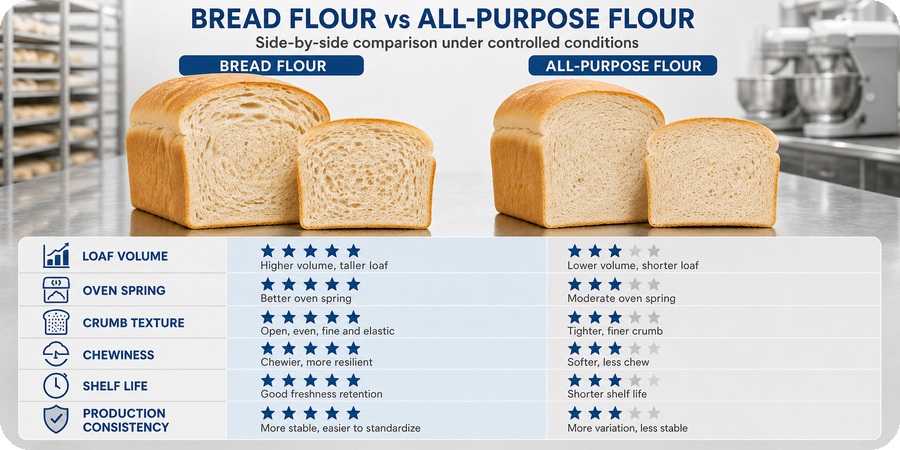
نعم، يمكن استخدام الدقيق متعدد الاستخدامات في العديد من منتجات الخبز، وخاصة الأرغفة الصغيرة، واللفائف البسيطة، والخبز المسطح، والوصفات التي تتطلب تخميرًا قصيرًا. كما أنه مفيد عندما يرغب المخبز في الحصول على قوام أكثر طراوة. مع ذلك، لا ينبغي اعتبار استبدال الدقيق قرارًا نهائيًا في الإنتاج دون إجراء اختبارات.
إذا استبدلت دقيق الخبز بدقيق متعدد الاستخدامات، فقد تحتاج العجينة إلى كمية أقل من الماء، ووقت عجن أقصر، ومعاملة ألطف، أو وقت تخمير مُعدّل. وقد يكون الخبز النهائي أقل مضغًا وأقل حجمًا بعض الشيء. بالنسبة للخباز المنزلي، قد يكون ذلك مقبولًا. أما بالنسبة للمخبز الذي يبيع منتجًا موحدًا، فقد يؤثر هذا الاختلاف على توقعات العملاء وعلى اتساق التغليف.
أفضل طريقة هي إجراء تجارب مضبوطة. قارن درجة حرارة العجين، وامتصاصه، ووقت العجن، وارتفاعه أثناء التخمير، وارتفاعه في الفرن، وقوامه، وفترة صلاحيته. لا يُعتبر استبدال الدقيق ناجحًا إلا إذا استوفى المنتج النهائي معايير الجودة الخاصة بالمخبز بشكل متكرر، وليس لمرة واحدة فقط.
يُعدّ نوع دقيق الخبز مقابل الدقيق متعدد الاستخدامات مهمًا، ولكن ليس بنفس القدر بالنسبة لجميع المنتجات. عادةً ما يُوفّر دقيق الخبز تكوينًا أقوى للغلوتين، واحتفاظًا أفضل بالغاز، وحجمًا أكبر، وبنية أكثر تماسكًا للخبز المُخمّر بالخميرة. مع ذلك، يُمكن استخدام الدقيق متعدد الاستخدامات في صناعة أنواع الخبز الطرية، والفطائر، والمنتجات التي تُعطى فيها الأولوية للطراوة على حساب المتانة القصوى.
بالنسبة للمخابز التجارية، يعتمد الاختيار الأمثل على معايير المنتج، وتصميم الوصفة، والمعدات، وعملية التخمير، والأهداف المتعلقة بالتكلفة. ينبغي اختبار الدقيق كجزء من نظام الإنتاج الكامل، وليس بناءً على نسبة البروتين فقط.
هل تبحث عن نتائج خبز أكثر اتساقاً؟
مع47 عامًا من الخبرة في مجال التصنيعويتم التصدير إلى أكثر من 120 دولةنحن نساعد المخابز على تحسين اتساق المنتج وكفاءة الإنتاج.

هونغلينغتوفر حلولاً متكاملة للمخابز تشمل: • آلات فرد العجين•أدوات تخمير العجين•أفران الرف الدوارة•أفران سطحية • خلاطات حلزونية •حلول التبريد
تواصل مع فريقنا اليوم لمناقشة مشروع مخبزك والحصول على حل مصمم خصيصًا لك.
اشترك معنا , يمكنك الحصول على أحدث محتوى منتجاتنا , تقارير إخبارية حصرية وتحديثات , آخر الأحداث المحلية


online service






 +8613066853339