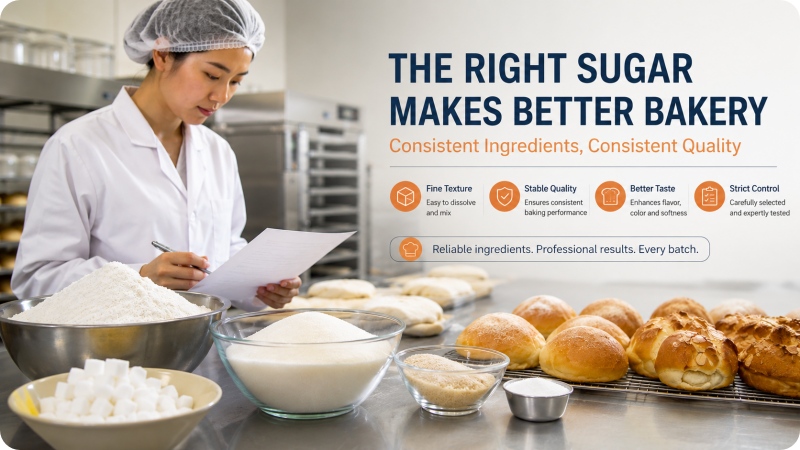
يُنظر إلى السكر عادةً على أنه مُحلي، لكن في صناعة المخبوزات، لا يقتصر دوره على إضافة الحلاوة فحسب، بل يُغير لون القشرة، ويتحكم في قوامها، ويؤثر على نشاط الخميرة، ويساعد في الاحتفاظ بالرطوبة، ويؤثر على سلوك المنتجات أثناء الخلط والتخمير والخبز والتبريد والتعبئة. في المخابز التجارية، تزداد أهمية هذه التأثيرات لأن تغييرًا بسيطًا في الوصفة قد يؤثر على مئات أو آلاف المنتجات النهائية.
سواءً كان المخبز ينتج الخبز، أو لفائف البرغر، أو الكعك، أو البسكويت، أو لفائف الحلوى، أو الوجبات الخفيفة المعلبة، يجب التحكم في كمية السكر بنفس الدقة التي نتحكم بها في الدقيق والماء والخميرة ودرجة الحرارة. إن فهم كيفية عمل السكر يساعد فرق الإنتاج على تحسين جودة المنتجات، وتقليل الهدر، وتعديل الوصفات بثقة.
كيف يتغير لون السكر أثناء الخبز
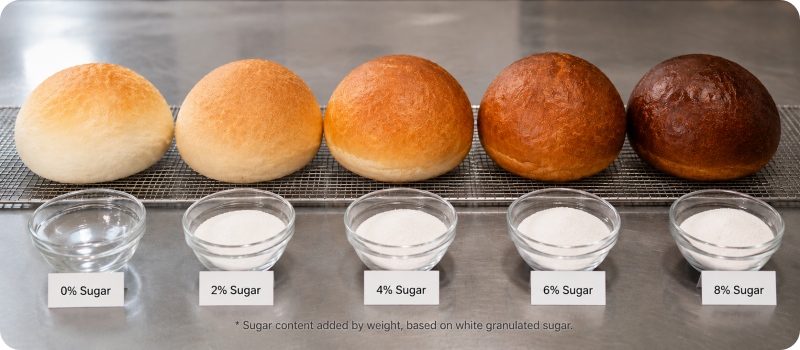
من أبرز تأثيرات السكر اللون. أثناء الخبز، تتسبب الحرارة في تحلل السكريات وتفاعلها مع البروتينات والأحماض الأمينية في العجين. يُسهم هذا في تحمير القشرة ومنحها اللون الذهبي الغني الذي يربطه المستهلكون بالنضارة والنكهة. ومن أهم هذه العمليات الكرملة وتفاعل ميلارد.
تحدث عملية الكرملة عندما يُسخّن السكر بدرجة كافية ليكتسب لونًا ونكهةً أعمق. أما تفاعل ميلارد، فيتضمن تفاعل السكريات والبروتينات معًا، مما يُنتج لونًا بنيًا معقدًا ونكهات محمصة. في الخبز والفطائر، تُساعد هذه التفاعلات على تكوين قشرة جذابة. وفي الكعك والبسكويت، تُؤثر على لون السطح ورائحته وجودته المُدركة.
إذا كانت نسبة السكر منخفضة جدًا، فقد تبدو المنتجات باهتة حتى بعد نضجها تمامًا. أما إذا كانت نسبة السكر مرتفعة جدًا، فقد يصبح لون القشرة داكنًا بسرعة كبيرة قبل أن ينضج الداخل جيدًا. لهذا السبب، يجب على المخابز التجارية الموازنة بين تصميم الوصفة ودرجة حرارة الفرن، ووقت الخبز، والبخار، وتدفق الهواء.
كيف يؤثر السكر على الملمس
يُغيّر السكر قوام العجين من خلال منافسة الدقيق والنشا على الماء. فعند ذوبانه، يحتفظ السكر بالرطوبة في العجين، مما يجعله أكثر ليونة وطراوة، ويؤخر جفافه. في الكعك، يُساعد السكر على تكوين فتات ناعم وملمس لذيذ. أما في البسكويت، فيؤثر على سهولة انتشاره وقرمشته وملمسه المطاطي. وفي الخبز الحلو، يُساهم في طراوته وإطالة مدة صلاحيته.
مع ذلك، فإن الإفراط في تناول السكر قد يُضعف بنية العجين. ولأن السكر يجذب الماء، فإنه يُبطئ عملية تكوين الغلوتين ويؤخر عملية جلتنة النشا. والنتيجة قد تكون منتجًا طريًا ولكنه أقل تماسكًا. في صناعة الخبز، غالبًا ما تتطلب الوصفات الغنية بالسكر تعديل وقت الخلط، واستخدام دقيق أقوى، والتحكم في عملية التخمير، أو خبزًا أكثر دقة للحفاظ على حجم العجين وشكله.
بالنسبة للمصانع، لا يقتصر التحكم في قوام العجين على الوصفة فحسب، بل يشمل المعدات أيضاً. يجب أن تعمل الخلاطات على عجن العجين بشكل متجانس، ويجب أن توفر أجهزة التخمير رطوبة ودرجة حرارة ثابتتين، ويجب أن توفر الأفران حرارة كافية لتثبيت بنية العجين دون زيادة لون القشرة. يزيد السكر من حساسية هذه الضوابط، خاصة في العجائن الغنية.
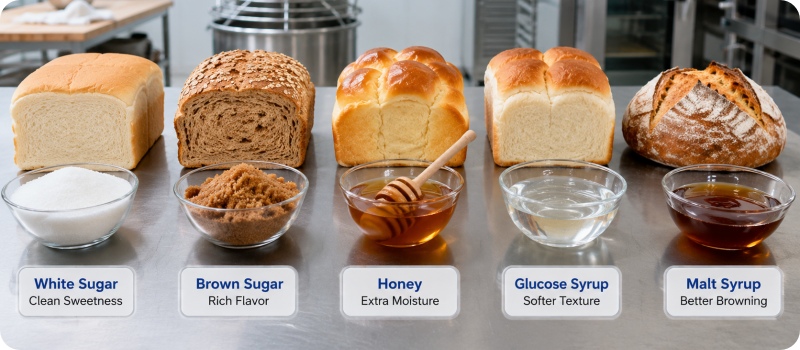
تُنتج أنواع السكريات المختلفة نتائج مختلفة
لا تتصرف جميع أنواع السكريات بنفس الطريقة.
يعتمد اختيار السكر المناسب على خصائص المنتج المرغوبة وليس على الحلاوة وحدها.
نصائح عملية للمخابز التجارية
إن إعادة صياغة الوصفة بنجاح تتطلب موازنة متغيرات متعددة معًا.
أخطاء شائعة عند استخدام السكر
يمكن إرجاع العديد من مشاكل الإنتاج إلى سوء إدارة السكر.
إن إدراك هذه التفاعلات يساعد الخبازين على إجراء تعديلات مدروسة بدلاً من حل المشكلات من خلال التجربة والخطأ.
هل تبحث عن نتائج خبز أكثر اتساقاً؟
مع47 عامًا من الخبرة في مجال التصنيعويتم التصدير إلى أكثر من 120 دولةنحن نساعد المخابز على تحسين اتساق المنتج وكفاءة الإنتاج.

هونغلينغتوفر حلولاً متكاملة للمخابز تشمل: • آلات فرد العجين•أدوات تخمير العجين•أفران الرف الدوارة•أفران سطحية • خلاطات حلزونية •حلول التبريد
تواصل مع فريقنا اليوم لمناقشة مشروع مخبزك والحصول على حل مصمم خصيصًا لك.
اشترك معنا , يمكنك الحصول على أحدث محتوى منتجاتنا , تقارير إخبارية حصرية وتحديثات , آخر الأحداث المحلية


online service






 +8613066853339