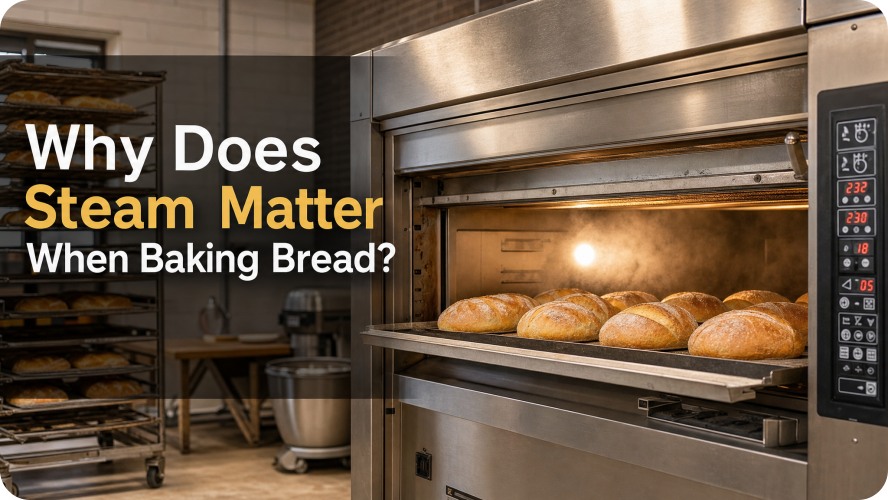
قد يغفل البعض عن تأثير البخار لأنه يظهر لفترة وجيزة أثناء الخبز، إلا أنه يؤثر بشكل مباشر على حجم الخبز، ولون قشرته، ولمعان سطحه، وشكله، وملمسه. في المخابز التجارية، لا يُعدّ البخار مجرد تقنية تقليدية يستخدمها الخبازون الحرفيون، بل هو أداة للتحكم في عملية الخبز، تساعد العجين على اجتياز الدقائق الأولى من الخبز بسلاسة وانتظام.
عندما يكون البخار ضعيفًا جدًا، أو متأخرًا جدًا، أو غير موزع بشكل جيد، قد يبدو الخبز باهتًا، أو يتمزق في أماكن غير مناسبة، أو لا يصل إلى الارتفاع المطلوب. أما عندما يكون البخار زائدًا أو لا يتم تهويته بشكل صحيح، فقد تصبح القشرة قاسية، أو بها بقع، أو تجف ببطء. إن فهم تأثير البخار يساعد فرق المخابز على اتخاذ قرارات أفضل بشأن اختيار الأفران، وبرامج الخبز، وفحوصات الإنتاج اليومية.
يؤخر البخار عملية تثبيت القشرة
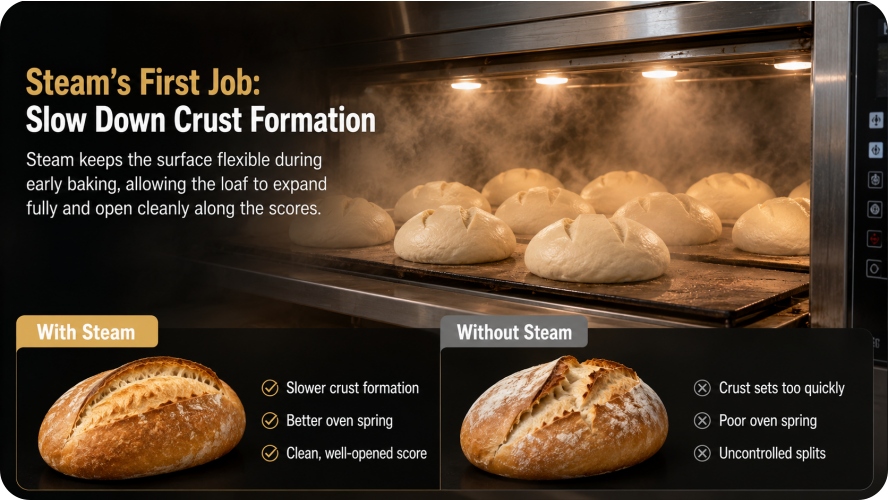
تتمثل الوظيفة الأولى للبخار في إبطاء عملية تكوين القشرة. فعندما يدخل العجين إلى فرن ساخن، يبدأ سطحه بالجفاف. وإذا جف السطح بسرعة كبيرة، فإنه يُشكّل طبقة رقيقة قبل أن يكتمل تمدد لبّ الرغيف. هذه الطبقة الرقيقة المبكرة تُعيق ارتفاع الرغيف في الفرن، وقد تُجبر الخبز على التشقق عند نقاط الضعف بدلاً من أن ينفتح بشكل نظيف على طول علامات التشقق.
يتكثف البخار على سطح العجين البارد، مما يحافظ على رطوبته لفترة وجيزة. وهذا يمنح الخميرة والتمدد الغازي والضغط الداخلي الوقت الكافي لرفع الرغيف. والنتيجة هي حجم أكبر، وتشققات أنظف، وشكل أجمل. هذه المرونة المبكرة ضرورية لخبز الباغيت، وخبز الفرن، وخبز المقلاة، والعديد من أنواع الخبز الصغير.
يساعد البخار على تحسين عملية انتفاخ الفرن
يعتمد ارتفاع العجين في الفرن على عدة عوامل: تطور العجين، والتخمير، ونشاط الخميرة، ودرجة حرارة الفرن، وانتقال الحرارة. لا يُغني البخار عن العجن الجيد أو التخمير، ولكنه يحمي العجين خلال المرحلة الانتقالية الحاسمة من العجين المخمر إلى الخبز المخبوز.
في الإنتاج، يُعدّ هذا الأمر بالغ الأهمية، خاصةً عند التعامل مع دفعات كبيرة وتحميل يستغرق وقتًا. فإذا حصل الرف أو سطح الخبز الأول على كمية كافية من البخار، بينما لم يحصل الرف أو السطح الأخير على الكمية الكافية، فقد ينتج عن نفس الوصفة أرغفة خبز بأطوال مختلفة. يساعد التوزيع المتساوي للبخار على خبز كل صينية أو سطح خبز في ظروف سطحية متماثلة. وهذا أحد الأسباب التي تدفع المخابز التجارية إلى تقييم ليس فقط درجة حرارة الفرن، بل أيضًا قدرة حقن البخار، وسرعة استعادة البخار، وتدفق الهواء داخل حجرة الخبز.
يُحسّن البخار لون القشرة ولمعانها وملمسها
يؤثر البخار أيضاً على المظهر النهائي للقشرة. فالسطح الرطب يسمح للنشا الموجود على سطح العجين بالتصلب قبل أن يجف. وتساهم هذه الطبقة الرقيقة المتصلبة في إضفاء اللمعان والقرمشة، بالإضافة إلى الحصول على قشرة نظيفة. كما أنها تدعم تطور اللون بشكل أفضل مع استمرار الخبز.
بدون كمية كافية من البخار، تُخبز العديد من أنواع الخبز بسطح مسطح غير لامع. وقد تبدو القشرة باهتة أو غير متساوية حتى مع خبزها بشكل صحيح من الداخل. أما مع البخار المناسب، فيمكن للعجين نفسه أن يكتسب مظهرًا أكثر احترافية: لون أكثر إشراقًا، وقوامًا أفضل، وقشرة تنكسر بسهولة عند تقطيعها أو تناولها.
مع ذلك، ليس بالضرورة أن يكون استخدام المزيد من البخار أفضل. فإذا بقي البخار لفترة طويلة، قد تُبطئ الرطوبة من جفاف القشرة، مما قد يُؤدي إلى تكوين قشرة سميكة أو قاسية، خاصةً في المنتجات التي تتطلب قوامًا خفيفًا. والهدف هو استخدام الكمية المناسبة من البخار في الوقت المناسب، متبوعةً بمرحلة التهوية الصحيحة.
لا يكون البخار متماثلاً بالنسبة لجميع المنتجات
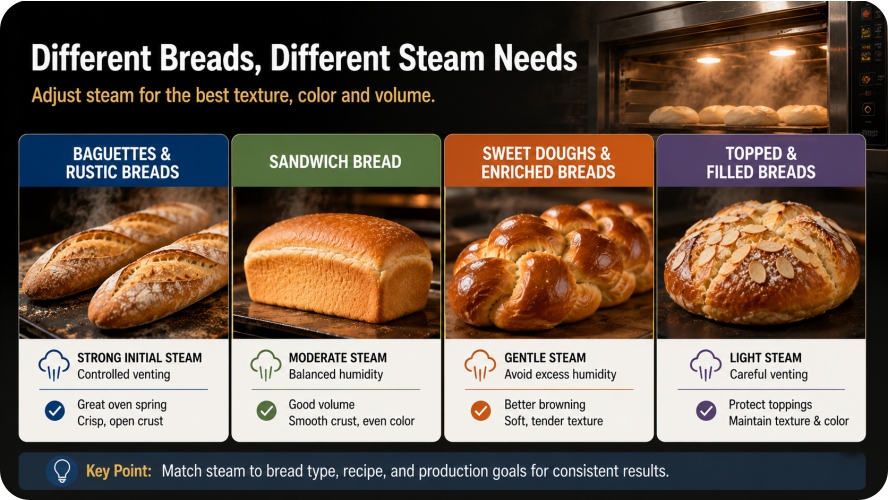
تتطلب أنواع الخبز المختلفة مستويات بخار مختلفة. عادةً ما يستفيد الخبز الفرنسي (الباغيت) والخبز الريفي المخبوز على الموقد من بخار قوي في البداية مع تحكم دقيق في التهوية. قد يحتاج خبز الساندويتش إلى كمية كافية من البخار للحفاظ على حجمه ونعومة قشرته، ولكن الرطوبة الزائدة قد تُليّن القشرة أو تُؤخر اكتساب اللون. أما العجائن الحلوة والخبز المدعم والمنتجات ذات الإضافات، فقد تتطلب طريقة طهي أكثر لطفًا، لأن السكر والدهون ودهن البيض والحشوات تؤثر بالفعل على لون الخبز وملمس سطحه.
لهذا السبب، لا ينبغي أن تعتمد عملية الخبز التجارية على نمط ثابت للبخار فقط. فنوع المنتج، ووزن العجين، ومستوى التخمير، وكثافة التحميل، ونوع الفرن، والقشرة المطلوبة، كلها عوامل مهمة. يجب على المخبز الذي ينتج أصنافًا متعددة توثيق وقت التبخير، ووقت التهوية، ودرجة الحرارة، ونمط التحميل لكل منتج.
كيف تتحكم المخابز التجارية في البخار
توقيت البخار
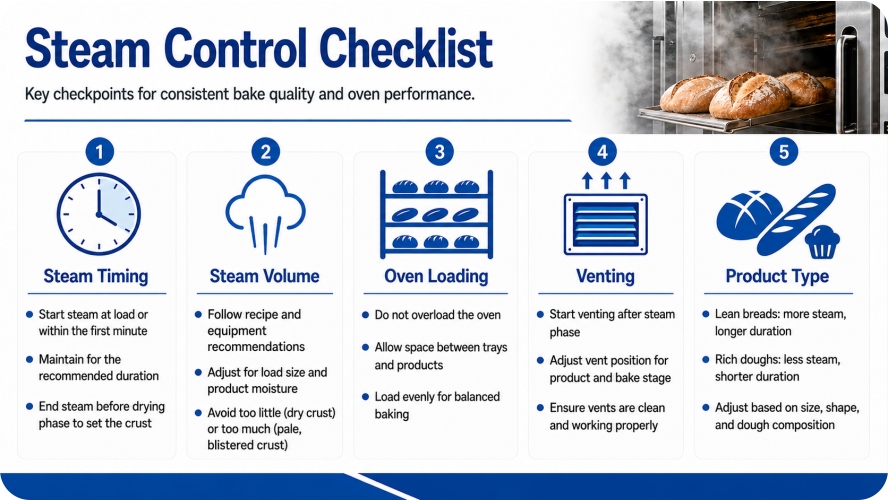
يُعدّ البخار ذا قيمة بالغة في بداية عملية الخبز. في العديد من عمليات تصنيع الخبز، يُضخّ البخار مباشرةً بعد وضع العجين في الفرن أو خلال المرحلة الأولى من الخبز. إذا تأخر ضخّه، فقد يكون سطح العجين قد بدأ بالجفاف، مما يقلل من فائدته. تساعد برامج الأفران الآلية على تقليل التباين بين المشغلين، خاصةً خلال فترات العمل المزدحمة.
حجم البخار
يجب أن تتناسب كمية البخار مع المنتج وحمولة الفرن. عادةً ما يتطلب رف الفرن الممتلئ أو الرف المثقل كمية بخار أكبر من كمية العجين الخفيفة، نظرًا لوجود مساحة أكبر من العجين تحتاج إلى التكييف. في الوقت نفسه، يؤدي البخار الزائد إلى هدر الطاقة وقد يبطئ عملية تكوين القشرة. ينبغي أن تقارن الاختبارات العملية حجم الرغيف ولون القشرة وشكلها وملمسها، وليس فقط كمية البخار المرئية داخل الفرن.
التهوية
تُزيل فتحات التهوية الرطوبة بعد مرحلة التمدد الأولية، مما يُساعد على تجفيف القشرة وجعلها مقرمشة وذات لونٍ مثالي. قد يؤدي سوء التهوية إلى ترك الخبز طريًا أو رطبًا، بينما قد تُقلل التهوية المبكرة جدًا من لمعان القشرة وارتفاعها في الفرن. يعتمد الإعداد الأمثل على نوع الخبز ومدة الخبز وتصميم الفرن.
تحميل الفرن
يتأثر التحكم بالبخار أيضًا بطريقة تحميل المنتجات. فعدم انتظام المسافة بين الصواني، أو التحميل الزائد على الرفوف، أو انسداد تدفق الهواء، أو التحميل البطيء، كلها عوامل قد تُحدث اختلافات بين الجزء الأمامي والخلفي من الفرن. لذا، ينبغي على فرق الإنتاج تقييم ما إذا كانت العيوب تظهر في مواقع محددة، لأن المشاكل المرتبطة بالموقع غالبًا ما تشير إلى مشاكل في توزيع البخار أو تدفق الهواء.
التعليمات
هل يحتاج كل خبز إلى البخار؟
لا. تستفيد العديد من أنواع الخبز المقرمش من البخار، لكن الخبز المدعم، واللفائف الطرية، والمعجنات، والمنتجات التي تحتوي على البيض أو نسبة عالية من السكر قد تتطلب كمية أقل من البخار أو مستوى رطوبة مختلفًا. ينبغي أن يحدد الهدف من المنتج إعدادات البخار.
متى يجب إضافة البخار أثناء خبز الخبز؟
يكون البخار عادةً أكثر فعالية مباشرةً بعد وضع العجين في الفرن، خلال المرحلة الأولى من الخبز. هذا يحافظ على مرونة سطح العجين أثناء تمدد الرغيف. أما استخدام البخار بعد ذلك فغالباً ما يكون أقل فعالية لأن القشرة قد تكون قد بدأت بالتشكل بالفعل.
هل يمكن أن يؤدي الإفراط في استخدام البخار إلى إتلاف جودة الخبز؟
نعم. قد يؤدي البخار الزائد أو سوء التهوية إلى جعل القشرة سميكة، أو قاسية، أو طرية، أو بطيئة التلوين. يجب أن يساعد البخار على التمدد المبكر، ثم يجب تقليل الرطوبة حتى تجف القشرة وتكتمل نضجها بشكل صحيح.
لماذا يجعل البخار قشرة الخبز لامعة؟
يُساعد البخار على تحويل النشا السطحي إلى هلام قبل أن تجف القشرة. وهذا يُنتج طبقة رقيقة لامعة تُحسّن اللمعان واللون والقرمشة في العديد من أنواع الخبز.
هل تبحث عن نتائج خبز أكثر اتساقاً؟
مع47 عامًا من الخبرة في مجال التصنيعويتم التصدير إلى أكثر من 120 دولةنحن نساعد المخابز على تحسين اتساق المنتج وكفاءة الإنتاج.

هونغلينغتوفر حلولاً متكاملة للمخابز تشمل: • آلات فرد العجين • أجهزة تخمير العجين • أفران الرفوف الدوارة • أفران السطح • الخلاطات الحلزونية • حلول التبريد
تواصل مع فريقنا اليوم لمناقشة مشروع مخبزك والحصول على حل مصمم خصيصًا لك..
مقالات ذات صلة
صودا الخبز مقابل مسحوق الخبز مقابل الخميرة: ما الفرق؟
فرن سطحي مقابل فرن حراري مقابل فرن رف دوار
لماذا يكون لون قشرة الخبز غير متجانس؟
اشترك معنا , يمكنك الحصول على أحدث محتوى منتجاتنا , تقارير إخبارية حصرية وتحديثات , آخر الأحداث المحلية


online service






 +8613066853339